

Call us: 1800 313 7800
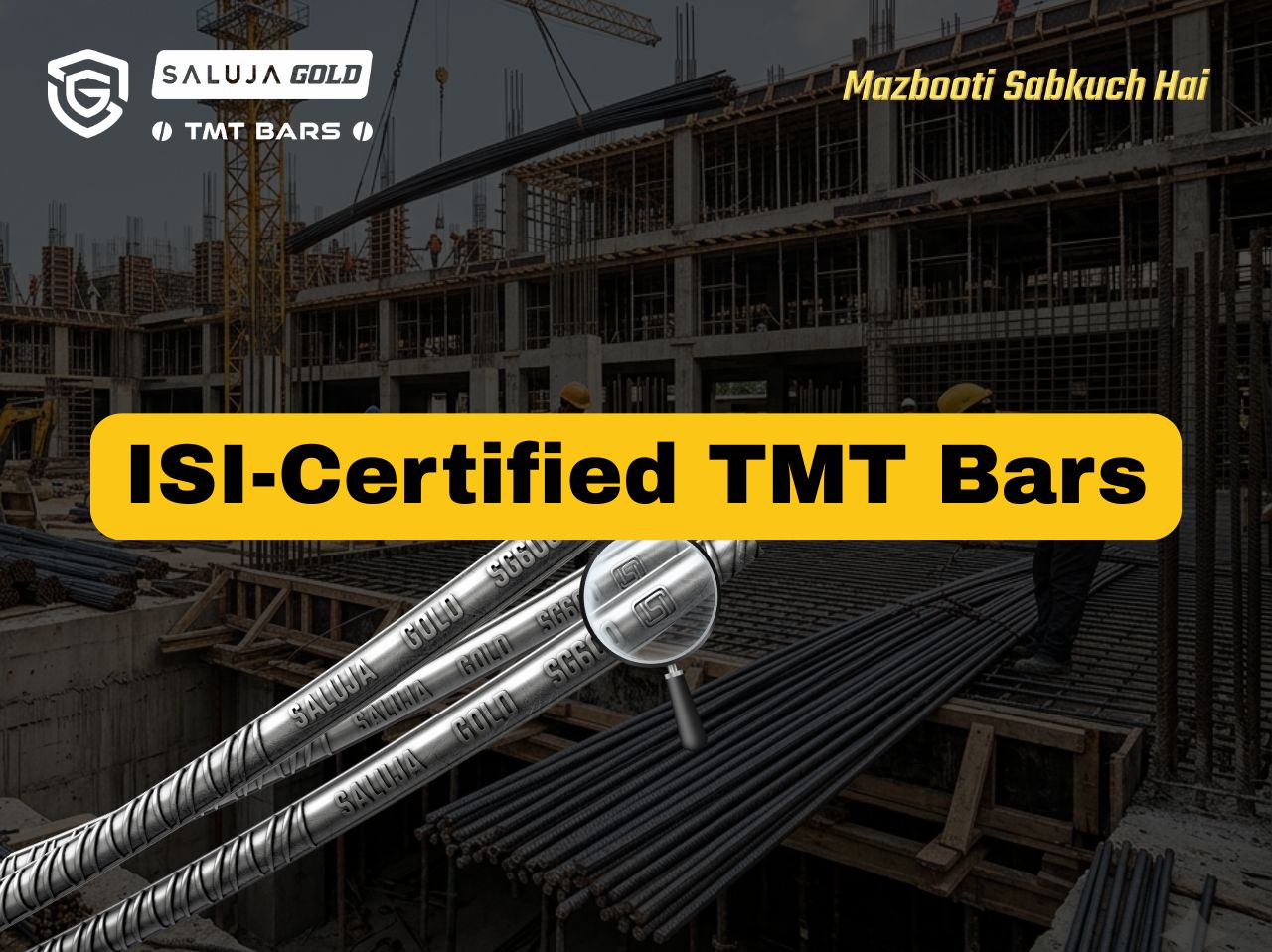
Why are ISI-Certified TMT Bars Considered the Best in Quality?

ISI-Certified TMT Bars for Reliable Construction
Strong buildings are a result of using strong steel. ISI-Certified TMT Bars are the hallmark of quality in India’s construction industry. We see them as the choice for safety and long life. Now let’s look at what makes them the best.
Meaning and Testing of ISI Certification
ISI certification is issued by the Bureau of Indian Standards (BIS), which in turn confirms that TMT bars meet strict national standards as per IS 1786. Factories apply for this mark, which they get after they prove consistent quality.
Testing begins with raw materials. BIS looks at chemical composition; they go for low in sulphur, phosphorus, and carbon, which in turn prevents brittleness and rust. For tensile strength the bars are stretched until they give way; it aims for 500 MPa or above in Fe 500 grade.
Bend tests at acute angles which do not produce cracks. It checks for deep, even Steel Reinforcement Rebar for better concrete grip. The bars are subject to salt spray and water. Only those bars which pass all of the above tests get the ISI mark which is applied.
Regular factory audits which maintain high standards. The testing authority rejects batches that fail tests. This process is what ensures that no one will have weak links to reach sites. Non-certified bars which skip these steps bring in variable quality.
Superior Strength and Earthquake Resistance
ISI-certified TMT bars have a hard exterior layer with a soft core. These are put through a thermomechanical process which improves the bars’ yield strength. These perform well with heavy loads in columns, beams, and slabs and do not deform.
In earthquakes ductility is what we see. At the core we see a 14-18% elongation before breakage, which is the shock absorption. Brittle bars break suddenly; in contrast, ISI ones bend and hold. Studies from IITs show that they outperform mild steel by 20-30% in seismic simulations.
High bond from the ribbed design is what transfers stress to the concrete evenly. This in turn prevents slippage during tremors. In multi-storey buildings in zones like Delhi or Gujarat, we see the use of Fe 550 grades for extra safety. The codes, like the NBC 2016 report, also mandate these features.
Real examples of that which is said – in Mumbai Metro lines ISI bars are used, which stand strong during quakes and monsoons. What fails early are the weak alternatives, which in turn cost lives and money.
Excellent Corrosion Resistance for Indian Conditions
India’s climate is a tough environment for steel. Monsoons bring in high levels of humidity; at the coasts we have high levels of salt in the air; urban centres have pollution issues which also play a role. ISI-certified TMT bars have that extra element of science behind them, which includes controlled chemistry and quenching processes.
Low alloy elements produce a barrier. Ribs which in turn create a tight concrete seal against oxygen and water. We see that they do last 50+ years in harsh soils as compared to 20-30 for others.
Coastal bridges in Kerala or high-rise buildings in Chennai have them. Soil acidity in rural areas? Not an issue. BIS standards for impurities see to that which lasts. Uncertified bars corrode quickly; they spall concrete and frames. Maintenance goes down. Owners see repair savings. Structures hold value for decades.
Safety, Reliability, and Cost Benefits
Safety is the top issue for all builders. Best Quality TMT Bars reduce the risk of collapse with proven performance. BIS mark means you get traceable quality with no batch issues. Insurance companies prefer those. Engineers do it with ease and on time. Homeowners sleep easy knowing that their homes are protected.
Over time we see that it pays off. With stronger bars we are able to use thinner sections, less steel in total. What you get is a longer lifespan, which in turn reduces retrofit costs. In commercial projects we see that it avoids downtime from cracks or failures.
Case in point: Rajasthan, which reported zero issues with the use of ISI bars in the reconstruction of warehouses post floods, has seen very good results. We also see from the stats that there is a 25% reduction in failures.
Selecting and Using ISI TMT Bars Right
ISI-certified TMT bars by the mark of BIS, the ISI 1786 logo and the mill test certificates which show results. Check uniform shine from right quenching, with no dull spots.
Match grades to needs: Fe 415 for home applications and Fe 500/550 for towers. Store off the ground, in a dry place. Install with proper laps (50x diameter), cover (40 mm minimum) and bind.
Consult engineers for design input. Buy from companies like Saluja Gold for quality and assurance. Stay away from cheap imports that do not go through local testing.
For more on our standards, go to the BIS website. Are you ready for your project? Go to SalujaGold.com today. Talk to us—build stronger, safer.