
Call us: 1800 313 7800
Key Takeaways
- The Threat: Corrosion causes concrete cracking, structural weakening, and expensive repairs.
- Primary Causes: Moisture, oxygen, chloride ions (salts), carbonation, and poor-quality concrete cover.
- Best Preventions: Use High-Quality TMT Bars, maintain adequate concrete cover depth, use dense concrete mixes, and store steel properly.
- Long-Term Value: Prioritizing quality over initial rebar price prevents catastrophic structural failures and cuts lifetime maintenance costs.
Preventing Corrosion in Steel Reinforcement Bars
The steel rebar is an important component in the strength and durability of modern structures. The quality and condition of the reinforcement are key to the life span of a residential building, a bridge, a commercial building or an industrial building. One of the most serious problems with any Reinforcing Bar is corrosion, however.
Corrosion in Steel Rebar can compromise the strength of the concrete, causing cracking, decreased load-bearing capacity, and costly repairs. By learning about the causes of corrosion and how to prevent it, you can make your construction projects last longer.
What Causes Corrosion in Reinforcement Bars?
The corrosion is due to the interaction of the steel with moisture, oxygen, and some chemicals present in the environment. This chemical reaction results in the rusting of the surface of the steel over time. As the rust develops, it will exert pressure on the concrete and cause cracking or harm to the structure.
There are many reasons for corrosion, such as:
- Exposure to wetness and dampness
- Swelling due to seawater or chemical contamination due to chloride ions
- Poor-quality concrete
- Inadequate concrete cover
- Carbonation of concrete
- The reinforcement used in the structure is not the correct type.
If not properly protected, buildings and infrastructure projects can suffer substantially from corrosion.
Why Corrosion Prevention Matters
Corrosion prevention is so much more than the look of it. It is important to structural safety and for the cost of maintenance. When the reinforcement bars corrode, they can cause:
- Reduced structural strength
- This is where cracking and spalling of the concrete surfaces occur.
- Increased repair expenses
- Lower building lifespan
- Occupant safety hazards.
Investing in Corrosion-Resistant TMT Rebars can certainly ensure that the property owner won’t face huge expenses for repair work and that the structures are durable.
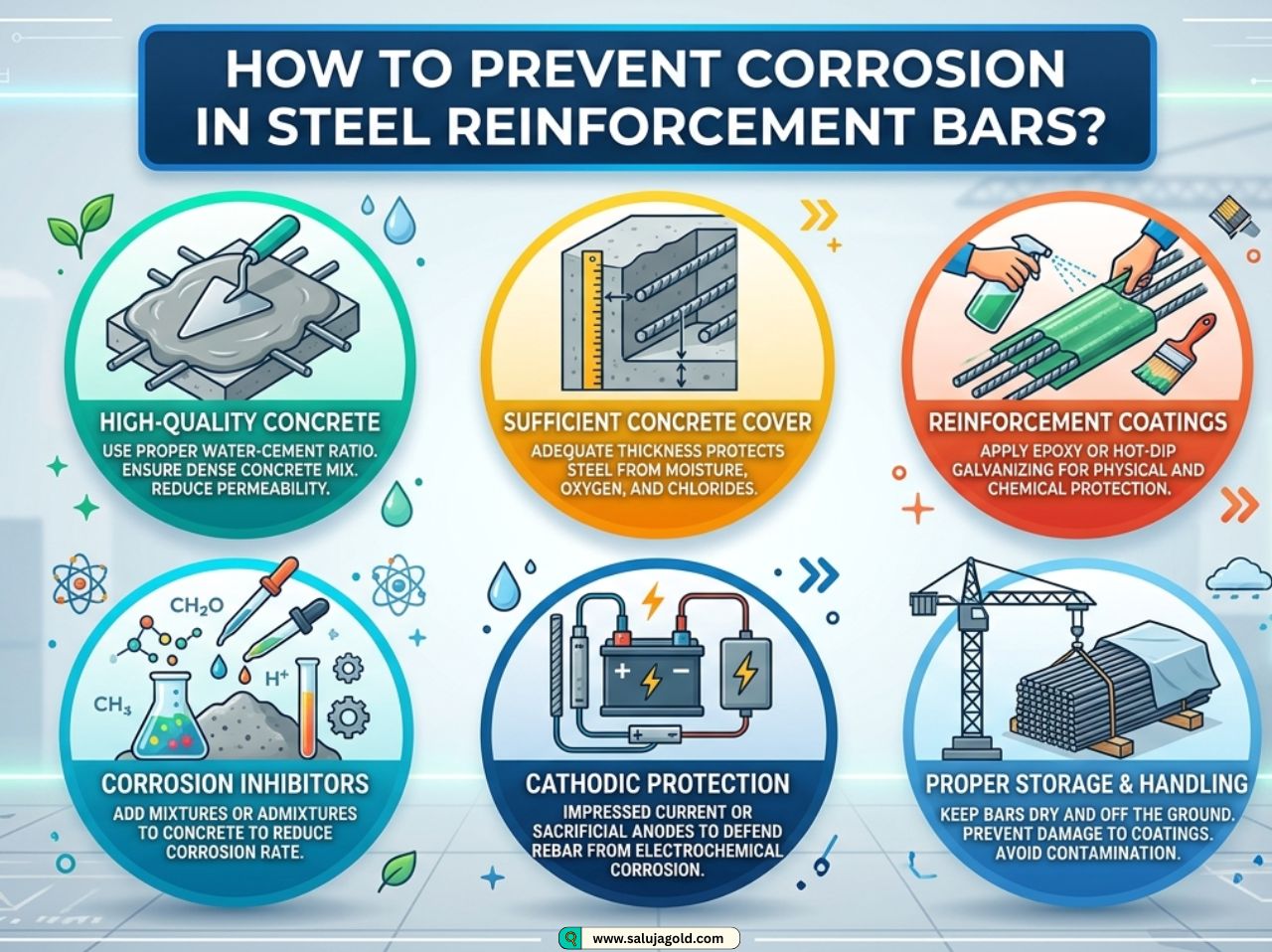
Effective Ways to Prevent Corrosion in Steel Reinforcement Bars
1. Choose High-Quality TMT Rebars
The first step in corrosion prevention is to use the best quality reinforcement bars. Modern TMT Rebars are produced by the latest TMT technology, thereby enhancing the strength and corrosion resistance of the product.
High-quality TMT bars have a finer microstructure and a lower amount of impurities, and thus, they are less prone to environmental effects. When it comes to choosing a manufacturer, it’s essential to choose a well-known brand that will ensure reliability and durability.
2. Ensure Proper Concrete Cover
The purpose of the concrete is to safeguard the reinforcement steel from the outside. A properly designed concrete cover will keep moisture, oxygen, and harmful chemicals away from the steel.
It is recommended that the concrete cover for construction should be decided on the basis of the environmental conditions and requirements of the structure.
3. Use Quality Concrete
To ensure long-lasting reinforcement bars, it’s crucial to achieve good concrete quality. Good density and compaction of concrete will minimise infiltration of water and corrosive materials.
Optimal water-cement ratio and the selection of the appropriate quality of construction materials can greatly benefit the performance of concrete and prevent corrosion of embedded steel.
4. Avoid Exposure to Moisture During Storage
Reinforcement bars can start to corrode even while they are being stored before installation. Steel should be stored in an elevated location out of the way of soil and standing water and kept dry.
The following are methods of good storage:
- Lining the roofs of buildings with waterproof materials
- Putting them on raised platforms
- Preventing them from getting too wet.
Simple measures can help avoid premature corrosion prior to construction.
5. Apply Protective Coatings
Protective coatings offer extra protection from corrosion. There are various coatings, such as epoxy coating, zinc coating, or anti-corrosion treatment.
The coatings form a layer between the steel surface and the environmental factors, thus preventing the development of rust.
The Role of Corrosion-Resistant TMT Rebars
The corrosion-resistant TMT Rebars are playing an important role in the construction sector.
The use of TMT Rebars in modern construction is growing in popularity as they provide increased durability and lifespan, making them a corrosion-resistant option. These bars are specifically designed to withstand challenging environmental conditions, including coastal regions, industrial zones, and high-humidity areas.
Some buyers are primarily interested in Reinforcement Steel Price; however, this is only part of the equation. Some buyers are mainly concerned about Reinforcement Steel Price, but they should also think about the quality of the reinforcement steel bars that they are buying and the value of investing in them in the long term. While the upfront cost of using TMT bars with higher quality might be slightly higher, the benefits of lower maintenance costs and longer lifespan of the structure can make it a worthwhile investment.
Why Choose Saluja Gold TMT Bars?
Saluja Gold is a manufacturer of high-quality TMT bars, which are manufactured with the view to meeting the demands of the modern building industry. Saluja Gold TMT bars are produced with high manufacturing technology, providing them with high corrosion resistance, high strength, and high durability.z
They are also engineered to function well and are well-suited for projects with long-term structural needs, like residential, commercial, and industrial buildings. When it comes to TMT bars, builders and homeowners can ensure their investment and create safe structures with the right TMTs.
Conclusion
One of the major problems of reinforcement steel in construction is corrosion. If the material is selected correctly, high-quality concrete, suitable protection measures are taken and regular maintenance is performed, corrosion and the life of a structure can be prevented.
Quality should be the most important factor determining the choice of Reinforcing Bar, rather than cost. While the price of Reinforcement Steel Price might fluctuate, the investment in high-quality Steel Rebar and corrosion-resistant TMT Rebars offers benefits in terms of durability, safety, and low maintenance costs.
Frequently Asked Questions (FAQs)
What causes corrosion in steel reinforcement bars?
Corrosion happens when water, oxygen, chlorides, and other corrosive materials come into contact with the steel reinforcement bars, causing the bars to rust and weaken the structure.Why are TMT rebars more resistant to corrosion?
Due to the application of advanced technology of thermo-mechanical treatment, the TMT rebar is significantly stronger, more durable, and corrosion-resistant than conventional steel bars.How can corrosion in steel rebars be prevented?
The following steps are effective to prevent corrosion: The use of high-quality TMT rebar, sufficient cover of concrete, quality concrete, application of protective coatings, and proper storage of steel before use.Does corrosion affect the lifespan of a building?
Yes. Corrosion weakens the steel reinforcement inside concrete, leading to cracks, reduced load-bearing capacity, increased maintenance costs, and a shorter structural lifespan.