
Call us: 1800 313 7800
Best Practices for Storing and Handling TMT Bars on Construction Sites
The selection of construction materials establishes the performance attributes which determine the eventual structural performance of a building project. TMT Steel Bars, also referred to as ‘thermo-mechanically treated’ bars, serve as essential building components for construction projects. The fact that TMT bars need proper treatment from storage through to their application is crucial since their finest quality TMT bars will suffer strength loss through improper usage.
Let’s be real. Although quality TMT bars such as Fe 550 D and Fe 600 are good quality, their performance will be degraded if they are subjected to moisture (e.g., rain) and/or rough treatment. Since climate fluctuations and the level of humidity can contribute to deteriorating the performance of TMT bars, it is even more important to be cognisant about protecting TMT bars here in India.
It is necessary to make sure that TMT bars are properly protected from the moment that they come on-site and are part of the overall integrity and longevity of the project. We will explain the process in a detailed manner from beginning to end.
Best Practices for Storing TMT Bars
- Choose a Proper Storage Area
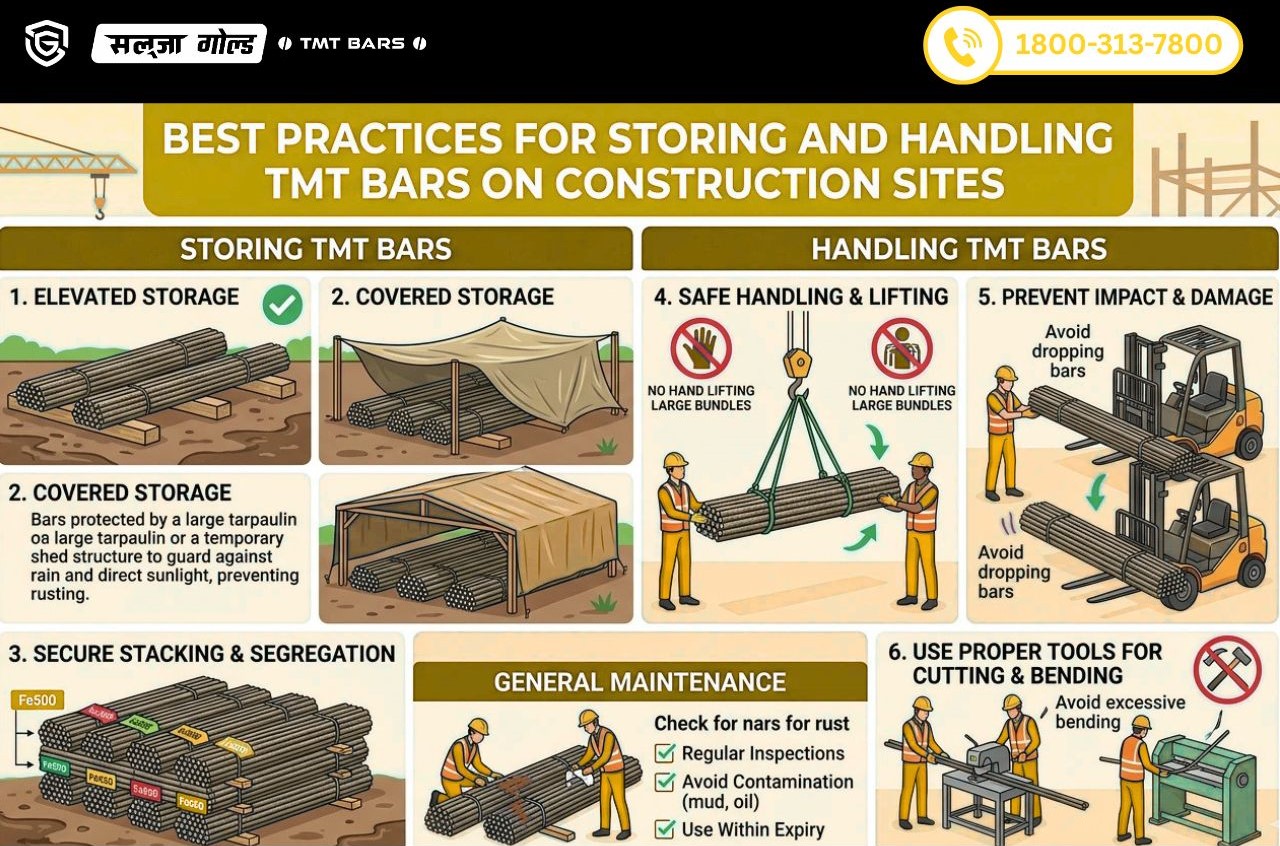
The initial step requires selecting an appropriate area for TMT bar storage. A storage area requires three vital conditions, which include maintaining dryness and cleanliness and providing proper air circulation. Airflow systems work to decrease moisture buildup because moisture serves as the main factor that leads to rusting.
Construction sites should not have any building activities which involve water collection or water exposure to create damp conditions. Builders must protect the bars from rain and direct sunlight by using shed storage or proper cover systems. Excessive weather exposure will progressively harm the bar surfaces. The right storage location enables you to protect your TMT bars until their scheduled usage time.
- Stack the bars the right way
The current section will explain how to stack bars. This area represents the main source of errors for construction sites. People who handle bars will create dangerous conditions when they toss bars without organising them properly. The Best TMT Bar For Constructions must stay above ground height at all times.
The distance needs to be at least a few inches, which will prevent soil moisture from reaching the steel material. The method helps bars maintain their original shape while making future handling tasks less difficult. When the stack becomes not straight or unstable, it raises the chances that objects will bend or that site accidents will happen.
- Label & Organize The Bars
Construction sites often require multiple TMT bar sizes and grades, which creates organisational challenges because no proper system exists. The best method for labelling stacks requires clear identification. You must include the bar dimensions and grade and type information.
Workers can quickly select the required material through this process. The method also prevents errors which result in expensive problems. Another simple practice is using older stock first. This way, bars don’t stay unused for too long. The method of keeping things organised can appear unimportant initially, but it actually boosts productivity while minimizing waste.
- Protect Bars from Rust
Steel faces its main danger from rust formation. TMT bars will develop rust when they stay exposed to moisture for an extended period. The process causes the bar to lose strength. Coastal regions need special protection methods because their high humidity levels require extra protection methods. The method of applying protective coatings to bars creates a shielding system.
The coatings create a protective shield which separates the steel from all external elements. Every basic covering technique, including plastic sheets and tarpaulin, offers effective moisture protection through its ability to reduce direct moisture contact. The mission requires us to achieve a single objective which involves keeping the bars completely dry.
- Regular inspection is a must.
The bars require storage, but they need continuous monitoring afterwards. The process requires you to conduct inspections at scheduled times. The inspection process enables you to detect all issues before they escalate into more significant concerns. Inspect the area for rust presence along with signs of bending and other damage. The workers need to put aside any bars which they find to be irregular.
Using damaged materials when building causes structural failures that affect the overall strength of the structures. By using only a short amount of time to perform a regular inspection of the quality and safety, you can maintain an environment free of injury and provide a safe working environment by providing ongoing protection of quality and safety.
Best Practices for Handling TMT Bars
- Lift and Move with Care
The proper handling of TMT bars requires equal attention to both their correct storage procedures and their appropriate handling methods. The loading and unloading process frequently results in bar damage because it creates multiple opportunities for accidents to occur. The common error of dragging them across surfaces leads to two negative results, which include surface scratches and the loss of protective coatings.
Instead of using manual methods to move the bars, workers should use operational machinery that includes cranes and lifting tools. The process helps maintain the original condition of the bars while minimizing any physical harm to them. The process of careful handling enables workers to complete their tasks in a more efficient way.
- Avoid Bending or Twisting
TMT bars achieve their maximum strength through their design, but their strength gets compromised when people force them into unnatural positions. The construction process depends on a bar’s ability to maintain its original shape because any shape change will disrupt its normal performance.
The bars need to maintain their straight position throughout both transportation and handling processes. Workers should keep their distance from the bars and not apply any force to move them. The bars must remain in their original state so they can deliver their intended strength capacity.
- Safety of Workers Comes First
The process of transporting steel bars requires special safety precautions because it presents difficulties. The employees need to use correct safety equipment when they handle TMT bars. Gloves protect workers from cutting injuries which result from contact with sharp objects, while safety shoes provide protection against injuries which occur when heavy objects fall. The creation of a secure working environment protects workers from dangers while it enables uninterrupted operations at construction sites.
Ensuring TMT Bar Quality During Construction
- Check Before Use
The construction process requires TMT bars to undergo a quality assessment before their actual installation work begins. The checking process requires you to examine the markings and size and grade of the material. This procedure ensures that you select the correct materials needed for your work.
Bars that fail to meet established standards should remain unavailable for use. The building should be protected by replacing them instead of using them. The building should be protected through the process of replacing it instead of using the existing materials.
- Follow Good Practices Throughout
The responsibility for the bars continues after they arrive at the project site. The process of proper storage and handling should continue until the bars reach their complete usage during construction. The process requires complete uniformity through this method. The process of maintaining consistent care from beginning to end results in better building outcomes because it automatically enhances the structure’s final quality.
Conclusion
Strong construction requires both high-quality materials and proper material maintenance. TMT bars serve as the essential part of all structures because they determine a building’s strength and durability through their current condition. The process of keeping them dry involves stacking them in the proper way, while you need to protect them from rust through proper handling methods.
The process of carrying out these minor actions leads to significant impacts that extend over time. The construction safety of your project requires you to follow all of these practices. Your materials will provide long-term support for your structure when you handle them with appropriate care.
FAQs
Why should TMT bars be stored properly?
Because if you don’t, the metal bars will directly catch rust from moisture. The more the rusting of bars, the more decrease in their strength. So, proper storage of bars will simply aid in the preservation of their strength and keeping them safe for use.
How do I stack TMT bars the right way on-site?
You should elevate the bars above the ground and position them in a straight line at a horizontal level. The method prevents moisture contact with bars while it protects against their bending.
How to protect TMT bars from developing rust?
The easiest way is to keep them dry and covered. Protective coatings apply to areas with high humidity. The basic covering, which includes tarpaulin, provides significant protective benefits.
What really should be used to lift or move TMT bars?
The most preferable choice would be to use proper lifting tools like cranes or machines. When you drag the bars on the ground, it is very likely that the surface will get damaged, and later rusting is what you might face.
Will poor handling really affect construction quality?
Indeed, it can. If the bars get bent, damaged, or rusty, their performance is definitely going to be affected. Eventually, the entire structure can be at risk of weakening over time.