

Call us: 1800 313 7800
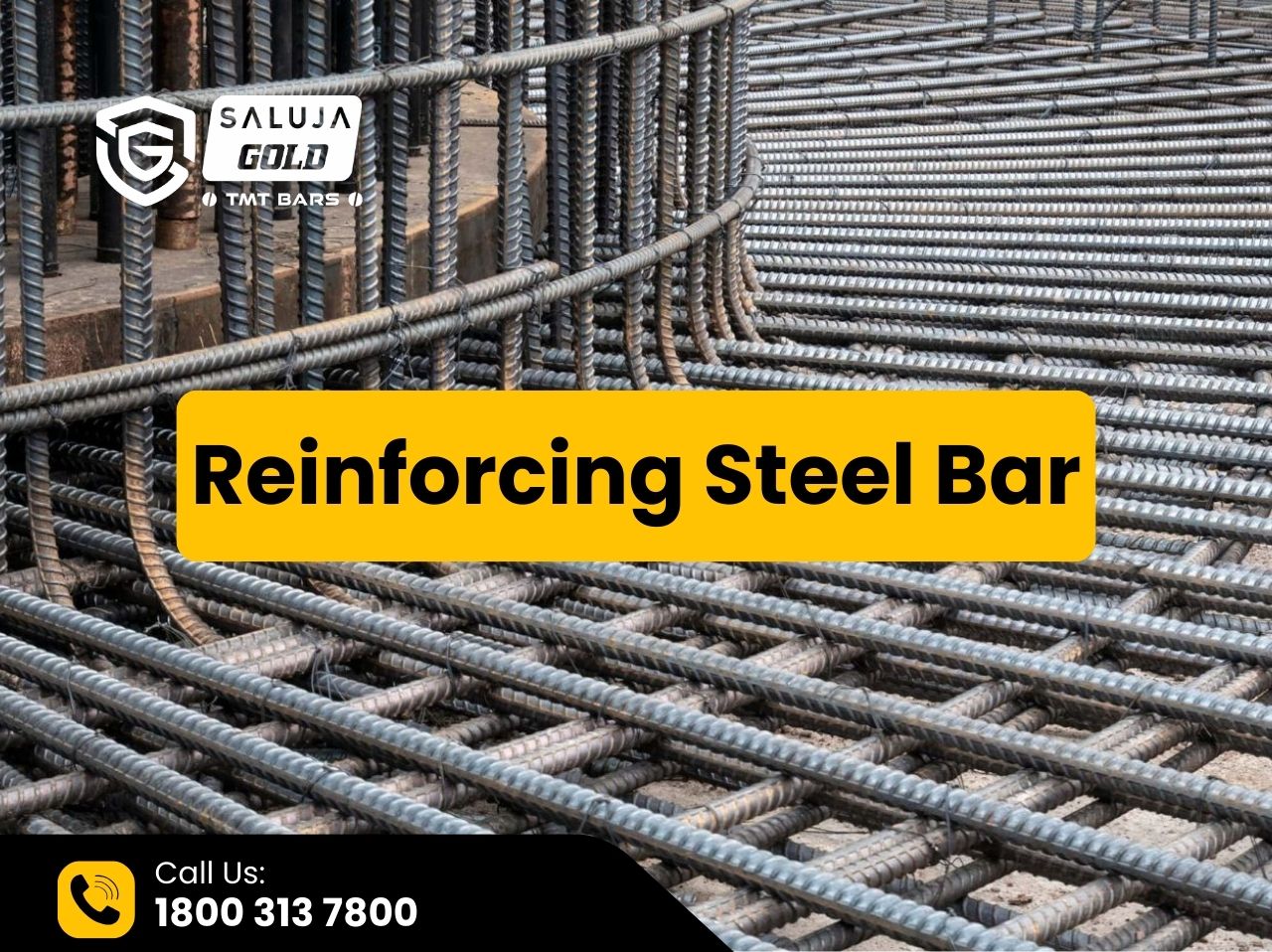
Saluja Gold Reinforcing Steel Bar Price

Reinforcing Steel Bar Price: What Really Drives the Cost in Today’s Market?
Reinforcing Bar prices tell only part of the story. They are a result of production methods, quality grades, supply chains, and compliance with construction standards. As you go about sourcing rebar for residential work or large-scale infrastructure projects, knowing which factors into the price will help you avoid expensive mistakes.
Instead of going with the cheapest option, we look at value, strength, durability, consistency, and long-term performance, which is what we will discuss in this blog.
Let out that when we think of reinforcing steel prices, what we are mainly thinking of is cost planning. Also, we are thinking about whether the project will stay on track or not. But here’s the twist: the price of a reinforcing bar is not always a number.
We see it as a result of raw materials, manufacturing processes, market demand, quality standards and also global trends. In construction, procurement, or project planning, if you are to know what causes prices to fluctuate, it is of greater importance than which exact numbers we are dealing with.
In this guide, we go over it in very simple terms, with no technical talk. Just the essentials you need to know that will guide you to make better decisions when buying steel reinforcement rebar.
What Is a Steel Reinforcement Bar?
A Rebar Reinforcing Steel is a metal that is put in the middle of a concrete block during the construction of the latter. Concrete is very good at one thing: it can withstand compression for a long time. However, when it comes to tension, it is very weak. That is where steel reinforcement in the form of rebar comes in. Together, concrete and rebar are what we use to build for the duration of decades.
Rebar, which is reinforcing steel, is used in:
- Residential buildings
- Bridges and flyovers
- Dams and tunnels, industrial foundations
- High-rise structures
Its role is of great importance, and so is which quality to choose.
Key Factors Which Affect Steel Bar Price
- Raw Material Quality – At the start is raw steel. What we put in terms of iron ore or recycled steel purity and composition will, in turn, impact the performance of a reinforcing bar.
Higher-quality raw materials mean better-quality base materials do:
- Better tensile strength
- Improved ductility
- Higher resistance to cracks
Naturally, that which you see is not the whole story at first; it may seem that there is no difference in the price of the reinforcement steel bars, but there is.
- Production Process – Not all rebars are equal. Today, modern technology for manufacturing, such as thermo-mechanical treatment, is used to produce steel reinforcement rebar, which has a strong external layer and a soft core. This balance, which we see in the product, improves flexibility and load-bearing capacity.
Advanced procedures include:
- Controlled cooling
- Precise temperature regulation
- Automated quality checks
These steps bring value out, which is reflected in pricing.
- Grade and Level Standards – Rebar grades are varied; we use them for different structural purposes. Better grades of rebar provide more strength and durability.
If your project demands:
- Earthquake resistance
- Heavy load-bearing capacity
- Long-span structures
Then, at a higher grade, we see that rebar reinforcing steel is what you want. Also, grades indeed do, in fact, play a large role in pricing.
- Market Trends of Supply and Demand – Honestly, timing matters. During construction booms, which we see in infrastructure projects in particular, demand for reinforcing bars goes through the roof. At the same time, supply may not keep up, which in turn plays into price trends.
On the other hand, slow construction cycles often stabilise markets. This is what we see in experienced buyers: they plan out their procurement at the beginning as opposed to right before, which is the last minute.
- Transport – Steel is a heavy material. Also, it isn’t cheap to move. The logistics costs are a function of the distance between manufacturing plants and construction sites. Moreover, fuel prices, road conditions, and handling requirements affect the price of rebar as well. Sourcing locally also lessens the rerouting that happens with the delivery process; thus, delivery times get shorter.
Why Cheaper Rebar Can Cost You More Later?
Let’s face it, using cheaper steel reinforcement rebar will have an impact in the long term.
Low-quality rebars may:
- Corrode faster
- Develop cracks under stress.
- Compromise structural safety
Reinforcements, repairs and delays are a result of not having invested in reliable rebar reinforcing steel to begin with. In the long term, performance outdoes short-term savings.
How Does Quality Impact the Real Value of Reinforcing Bars?
A well-manufactured reinforcing bar offers:
- Consistent diameter and rib pattern
- Strong bond with concrete
- Better fatigue resistance
These elements also determine the life of the structure. That is what makes engineers review quality certifications, testing reports, and manufacturer credibility before we lock in on a supplier.
Reinforcement Steel Price vs Project Performance
Here is a simple way to look at it:
- Short-term view: Focus on the price point.
- Smart view: Focus on value for money.
A bit more of an investment in quality steel reinforcement rebar often results in:
- Reduced maintenance
- Higher safety margins
- Better compliance with building codes
In the end, this approach saves time and money.
Selecting the Proper Reinforcing Bar for Your Project
Before completing your purchase, ask yourself these:
- Does the rebar live up to international and national standards?
- Does the manufacturer have a reputation for quality?
- Has the steel been proven in tests for strength and ductility?
- Is technical support available if needed?
Making good decisions, which in turn sees you balance out Steel Reinforcement Rebar with real-world performance.
Industry trends shaping reinforcing steel.
The construction industry is evolving fast. Key trends include:
- Increased use of sustainable steel
- Demand for high-strength rebars
- Stricter quality compliance norms
- Preference for certified suppliers
These changes play into the production, testing, and supply of rebar reinforcing steel, which in turn affects market action.
Final Thoughts: Think beyond price
Saluja Gold Reinforcing steel bar price is a complex issue which includes quality, reliability, and long-term value. When it comes to safety, durability, and performance (which they always do), we have found that which reinforcing bar you use is a very strategic decision – not just one that plays out in your bottom line. Quality standards, manufacturer’s credibility, and project requirements are the parameters you should check before buying your next batch of steel reinforcement bars. Making the right choices today will lead to better buildings tomorrow.
Frequently Asked Questions (FAQs)
- What is the main factor for reinforcing steel bar price?
Raw material quality, production process, grade, market demand, and logistics are the main factors.
- Is the better quality rebar the one that looks at most times?
Not at all. What you put in terms of grade should fit the project structure. Also, over-specifying may lead to extra costs.
- Why do we care so much about rebar quality?
In the case of structural safety, the load-bearing capacity and long-term durability of the construction are considered.
- Does rebar quality vary by manufacturer?
Yes. The manufacture of our products, quality control processes and raw materials used may be different, which results in the differences in performance that we see.
- What is a good way for builders to assess rebar as a material?
Through review of certifications, testing reports, the manufacturer’s reputation, and compliance with construction standards.